
This doesn’t mean you that you must pick a brand new or expensive vehicle to be approved. It’s more about thinking about what’s realistic for you to afford – both for your initial loan, and any ongoing costs to do with the car. Think about it this way – lenders like us aren’t looking at your application and just considering if you can afford the monthly payments. That’s just one part of the puzzle. Instead, we’re also considering if the car you want makes sense with your application.
What do lenders really look for when applying for car finance?
If you’re thinking about applying for car finance or you’ve recently applied and are wondering what lenders like us are looking for on your application, we’re here to lift the lid on what’s going on behind the scenes.

How we look at your credit history

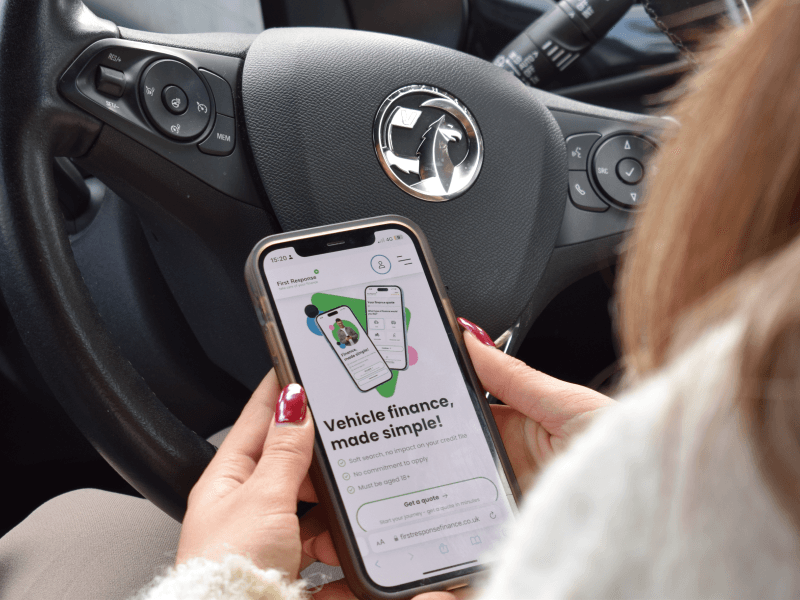
When you get a quote for car finance on our website, we’ll automatically run a soft credit search. This is designed to help you get an idea of your likelihood of being approved for a car loan with us and also helps us assess whether we will be able to lend to you. Having an understanding of your credit history before you apply will help to give you an idea of your eligibility, whether you choose to take out finance with us, or with another lender.
If you choose to go ahead, this is where we’ll take a closer look at your situation and run what is called a hard credit check – these are visible on your credit file, meaning other companies will be able to see that you’ve applied for credit. By running this, we’re able to paint a better picture of your financial story, and spot things like the amount of credit you’re currently using, if you’ve ever missed payments or if you’ve got a CCJ.
However, this isn’t where the journey stops. At First Response Finance, we understand that missing payments in the past doesn’t mean you’re certain to miss them in the future – after all, life happens. In these cases, we’re likely to want to talk to you on the phone, to get a better idea of your circumstances. This helps us to make a more informed decision about if we can lend to you. Other lenders will conduct similar checks to help verify that you are who you say you are – this is standard practice.
There may still be times in which after these conversations, the answer is still ‘no’. We understand that this isn’t an ideal answer to receive, but we will never agree to finance a customer if we believe that doing so will leave them worse off.
How we assess your income and outgoings

During your application, you’ll be asked to complete what is called your ‘income and expenditure’. This is basically a fancy way of saying, ‘how much are you earning and how much are you spending?’. This will include things like salary details, but also mortgage or rent payments, how much you spend on bills, childcare costs, and other regular outgoings.
By doing this, we can get a more accurate view on how much wiggle room there is in your monthly budget for your car finance loan. If you agree, we will use Open Banking to be able to validate this quickly and efficiently – otherwise, you’ll be asked to provide payslips or other proof of income (i.e. pension or benefit statements) instead.
Most, if not all, other lenders will conduct similar checks to this too – not only does it protect them, but it helps to protect you.
How we look at your employment status

There are several things that come into play when we look at your employment situation – most notably that is not always necessary to be in any form of employment to be able to take out finance. Every situation is different, for example, if you are currently unemployed but are claiming income through benefits, we may still be able to help you get on the road. Similarly, if you’re in part-time employment and your income is supported by your partner or family, this will also be taken into consideration.
We’re also able to help if you’re self-employed. While other lenders may see this as a riskier situation, we’ll take the time to assess your income – even if this varies over the course of a year – to help make the most helpful decision.
Things that will make a difference to our ability to lend to you include things like the stability of your employment and the length of time you’ve been in your current role. This will be similar with lenders across the market, and for other financial products too, like personal loans, mortgages or credit cards.
How we look at your address history
Like your employment history, we’ll look at your address history. This helps us to build an understanding of your situation and its stability.
There are typically two main reasons why we (and other lenders) will look at this. The first is that its another way to help us verify your identity. We can cross reference your address information with what’s shown on your credit file, to make sure there are no differences or missing bits. This is really important, as it helps to prevent identity fraud and make sure that your application is accurate.
Secondly, it simply helps us to see how often you have or haven’t moved home. Staying at one address for a longer period can signal stability, whereas someone who moves home more frequently may throw up some questions. If this applies to you, don’t panic – it doesn’t automatically mean that you won’t get approved. It just means that we may take a closer look at the rest of your application, like your income and employment history. It may also mean we need to speak to you, just to find out more around the circumstances for your moves – if you were moving a lot for work, for example, knowing this helps us to make more informed decisions around what we can help with.
Bonus tip: Make sure you’re on the electoral roll – a list of the names and addresses of everyone who’s registered to vote. This helps lenders quickly confirm your identity and adds another layer of credibility to your profile.
How important is your vehicle choice?
Alongside taking a look at your financial profile, the car you’re hoping to buy will also play a part in your application. There can be an element of risk associated with the car that you’ve chosen, which includes things like:
The car's value
Does it match the amount that you’re looking to borrow? We have the ability to verify the value of the car you're looking to buy, to make sure you're not over or underpaying.
Age and mileage
Older, higher mileage cars can be associated with more risk. This is because they may be more likely to encounter mechanical or reliability issues, compared to newer vehicles.
Make and model
As with age and mileage, there may be certain vehicles that we know through our years of experience, are more susceptible to faults or may be difficult to insure.
How much do you need a deposit?

A deposit isn’t always needed to car finance, but having the ability to put one down can help make a difference. This is because it reduces the amount that you need to borrow, helping to give you a little more flexibility with your credit limit, which then lowers the risk.
When it comes to how much of a deposit you need for car finance, there’s no one fixed rule. Even a small deposit can help, but it will ultimately depend on your circumstances and lender. If you’re not in a financial position to be able to put down a deposit, we may still be able to help, as we offer no deposit options. We will always strive to prioritise what is most affordable and sustainable for you.
Ultimately, when it comes to car finance, there’s no single thing that lenders look for when assessing your application.
Instead, they’ll be trying to build a complete picture of your situation. At First Response Finance, we want to help find the right option for you – something that fits comfortable with your budget and supports you to get back on the road with confidence.
If you're not sure where to start, we can help
Check your eligibility today with no risk to your credit score